
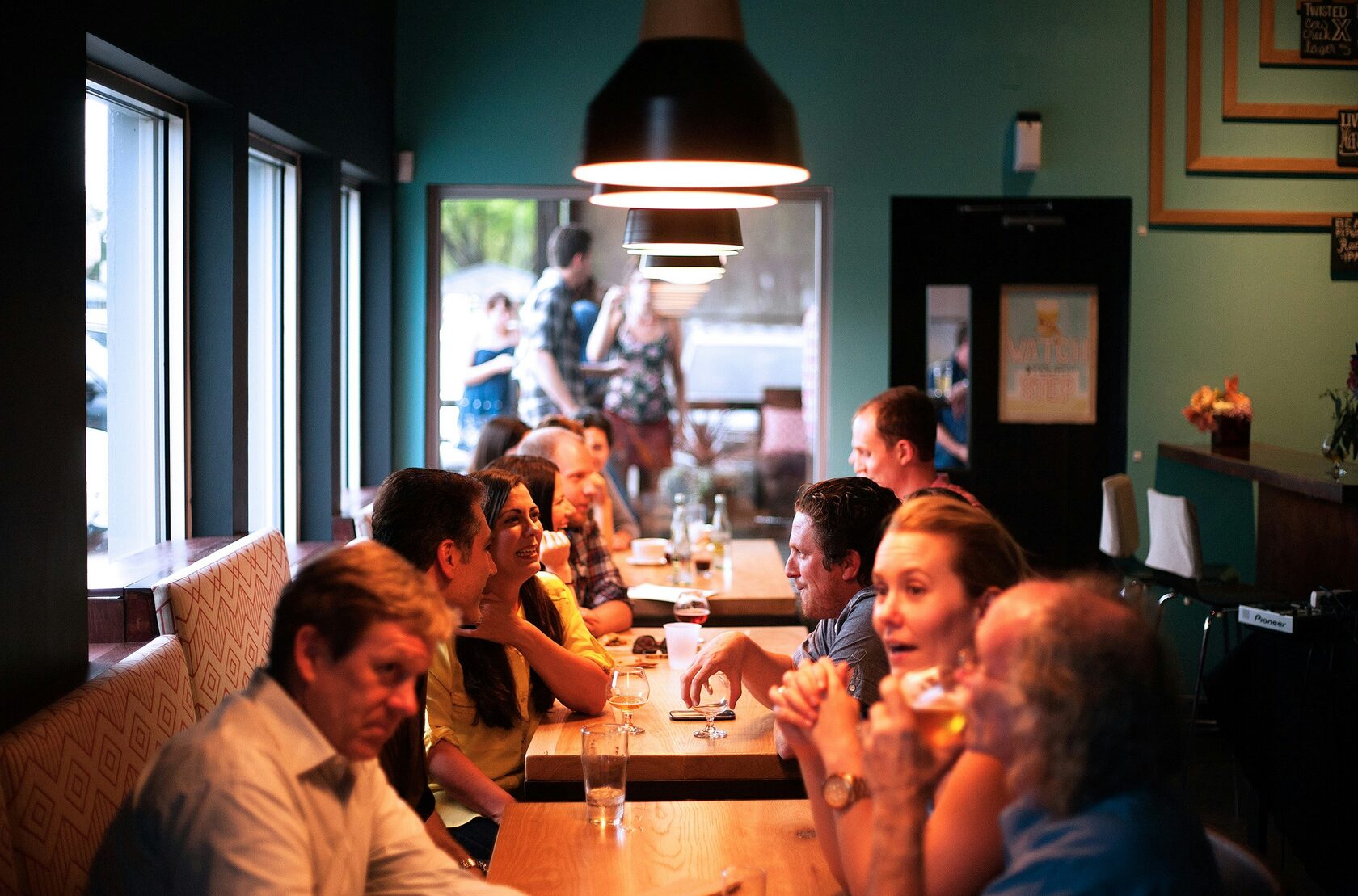
Online reservations are growing. Guest expectations are shifting. This guide covers where the operational gaps are and what AI communication tools can realistically do for independent restaurants.
The state of restaurant bookings in 2025
The restaurant and takeaway industry in Europe has a market size of €488 billion in 2026, growing at 7.2% annually. Full-service restaurants account for 46.1% of total European foodservice revenue.
The shift to digital is accelerating. According to Circana's Crest consumer panel, digital channels — including online reservations, click & collect, and delivery via app — now represent 7% of total restaurant traffic in Europe and are growing at +7% year-on-year. Evening dinner occasions are outperforming the broader market, growing at +1% even as overall traffic faces pressure from economic uncertainty and rising prices.
Deloitte's research on restaurant consumer behaviour finds that 40% of customers prefer to order or book directly from restaurant websites — a signal that direct digital channels matter, and that guests are actively looking for a way to engage without going through a third party.
According to EHL's 2025 Global Foodservice Outlook, the sector is navigating a combination of cost pressures, labour shortages, and rising guest expectations — making operational efficiency not just a competitive advantage, but a necessity for independent operators.
The shift to digital is accelerating. According to Circana's Crest consumer panel, digital channels — including online reservations, click & collect, and delivery via app — now represent 7% of total restaurant traffic in Europe and are growing at +7% year-on-year. Evening dinner occasions are outperforming the broader market, growing at +1% even as overall traffic faces pressure from economic uncertainty and rising prices.
Deloitte's research on restaurant consumer behaviour finds that 40% of customers prefer to order or book directly from restaurant websites — a signal that direct digital channels matter, and that guests are actively looking for a way to engage without going through a third party.
According to EHL's 2025 Global Foodservice Outlook, the sector is navigating a combination of cost pressures, labour shortages, and rising guest expectations — making operational efficiency not just a competitive advantage, but a necessity for independent operators.
The no-show problem — and what reduces it
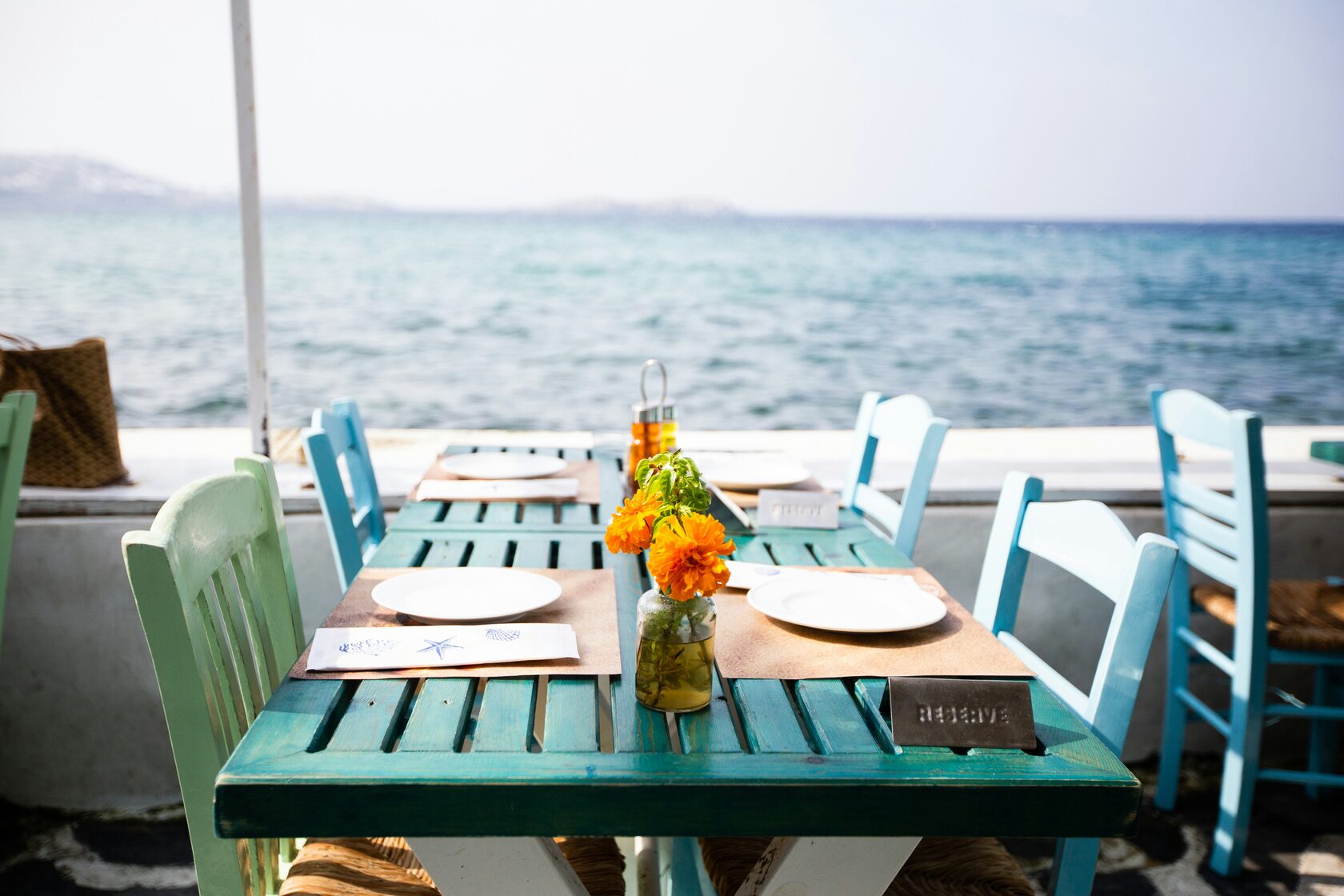
No-shows remain one of the most costly operational challenges in the restaurant industry. A 2025 study by Incrementoo — based on analysis of 212,000 reservations and nearly 800,000 covers across 300 Italian restaurants — found an average no-show rate of 12.8%. More than one in ten guests who reserved a table did not show up and gave no advance notice.
The same study identified two interventions that significantly reduce no-shows:
— Restaurants that require a deposit or pre-authorisation at the time of booking saw their no-show rate drop to 5.4% — a reduction of 58%
— Sending automatic reminders via SMS, WhatsApp, or email before the reservation reduced no-shows by a further 32%
Both interventions can be fully automated. An AI assistant that confirms a booking, requests a deposit, and sends a reminder the day before and the morning of the reservation does not require staff involvement for any of these steps. The reduction in no-shows is a direct operational and financial benefit — before considering any other value the system delivers.
The same study identified two interventions that significantly reduce no-shows:
— Restaurants that require a deposit or pre-authorisation at the time of booking saw their no-show rate drop to 5.4% — a reduction of 58%
— Sending automatic reminders via SMS, WhatsApp, or email before the reservation reduced no-shows by a further 32%
Both interventions can be fully automated. An AI assistant that confirms a booking, requests a deposit, and sends a reminder the day before and the morning of the reservation does not require staff involvement for any of these steps. The reduction in no-shows is a direct operational and financial benefit — before considering any other value the system delivers.
Where guest communication breaks down
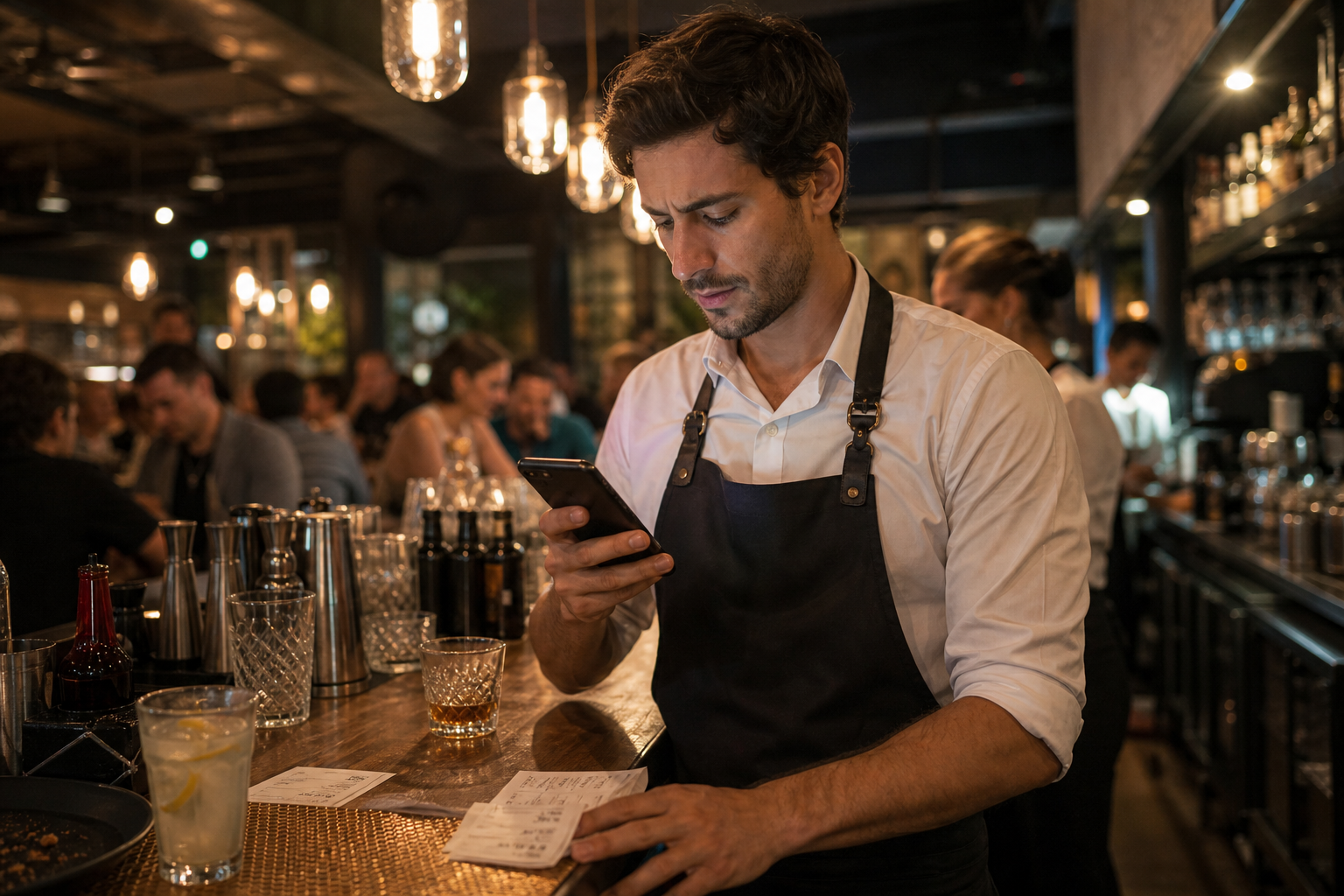
The operational pressure on restaurant teams is specific and well-understood. During service — Friday evening, Saturday lunch, Sunday brunch — the floor is at full capacity. The phone rings. WhatsApp messages arrive. Instagram DMs accumulate. No one has time to respond.
The guests sending those messages are not asking complex questions. Most of them are asking the same things:
"Do you have a table for two tonight at 8?"
"Is there a tasting menu?"
"Do you accommodate gluten-free?"
"Is there parking nearby?"
"Can we bring a baby?"
These questions are predictable, repetitive, and entirely answerable without human judgment. But during service, they compete for attention with the guests already in the room — and the guests in the room almost always win.
The result is a message that goes unanswered for two hours. By then, the guest has usually made a decision — often in favour of whoever replied first.
Research by InsideSales.com and the Kellogg School of Management — based on analysis of 100,000+ customer inquiries — found that responding within five minutes makes a business 21x more likely to convert an inquiry. Waiting just ten minutes drops that probability by 400%. For a restaurant team managing a full service, a five-minute window is not realistic without automation.
The guests sending those messages are not asking complex questions. Most of them are asking the same things:
"Do you have a table for two tonight at 8?"
"Is there a tasting menu?"
"Do you accommodate gluten-free?"
"Is there parking nearby?"
"Can we bring a baby?"
These questions are predictable, repetitive, and entirely answerable without human judgment. But during service, they compete for attention with the guests already in the room — and the guests in the room almost always win.
The result is a message that goes unanswered for two hours. By then, the guest has usually made a decision — often in favour of whoever replied first.
Research by InsideSales.com and the Kellogg School of Management — based on analysis of 100,000+ customer inquiries — found that responding within five minutes makes a business 21x more likely to convert an inquiry. Waiting just ten minutes drops that probability by 400%. For a restaurant team managing a full service, a five-minute window is not realistic without automation.
What AI communication tools actually do for restaurants
An AI assistant for a restaurant is a system trained on your specific venue — your menu, your availability, your policies, your tone — that handles the conversational layer of guest communication across WhatsApp, your website, Instagram DM, and other channels.
Before the reservation:
— Answers questions about availability, menu, dietary options, group bookings, location
— Confirms reservations directly, sends payment requests for deposits where required
— Communicates in the guest's language — essential for restaurants in tourist destinations
— Sends confirmation messages and reminders automatically, reducing no-shows
During the booking window:
— Manages simultaneous inquiries without delays
— Handles routine questions without staff involvement
— Routes complex requests — large group logistics, special occasions, accessibility needs — to the team with full context
Upselling and add-ons:
When a guest confirms a standard booking, the assistant can mention the tasting menu, the wine pairing, the private dining room, or a special upcoming event — contextually, as part of the conversation. Not as a promotional push, but as genuinely useful information for someone who is already choosing to come.
After the visit:
— Follows up with a personalised thank-you
— Requests a review on Google or TripAdvisor
— Shares a link to book the next visit or a special upcoming event
Before the reservation:
— Answers questions about availability, menu, dietary options, group bookings, location
— Confirms reservations directly, sends payment requests for deposits where required
— Communicates in the guest's language — essential for restaurants in tourist destinations
— Sends confirmation messages and reminders automatically, reducing no-shows
During the booking window:
— Manages simultaneous inquiries without delays
— Handles routine questions without staff involvement
— Routes complex requests — large group logistics, special occasions, accessibility needs — to the team with full context
Upselling and add-ons:
When a guest confirms a standard booking, the assistant can mention the tasting menu, the wine pairing, the private dining room, or a special upcoming event — contextually, as part of the conversation. Not as a promotional push, but as genuinely useful information for someone who is already choosing to come.
After the visit:
— Follows up with a personalised thank-you
— Requests a review on Google or TripAdvisor
— Shares a link to book the next visit or a special upcoming event
The multilingual dimension
Restaurants in tourist destinations across Europe serve guests from across the world. In cities like Rome, Florence, Barcelona, Paris, and Lisbon, a significant share of covers during peak season come from international visitors. They discover restaurants on Instagram, check Google reviews, and reach out — in German, French, English, Dutch, Japanese — often outside business hours.
An AI assistant that handles 150+ languages ensures that no inquiry is lost to a language gap or a time zone difference. The first reply arrives in the guest's language, immediately, regardless of when they message.
An AI assistant that handles 150+ languages ensures that no inquiry is lost to a language gap or a time zone difference. The first reply arrives in the guest's language, immediately, regardless of when they message.
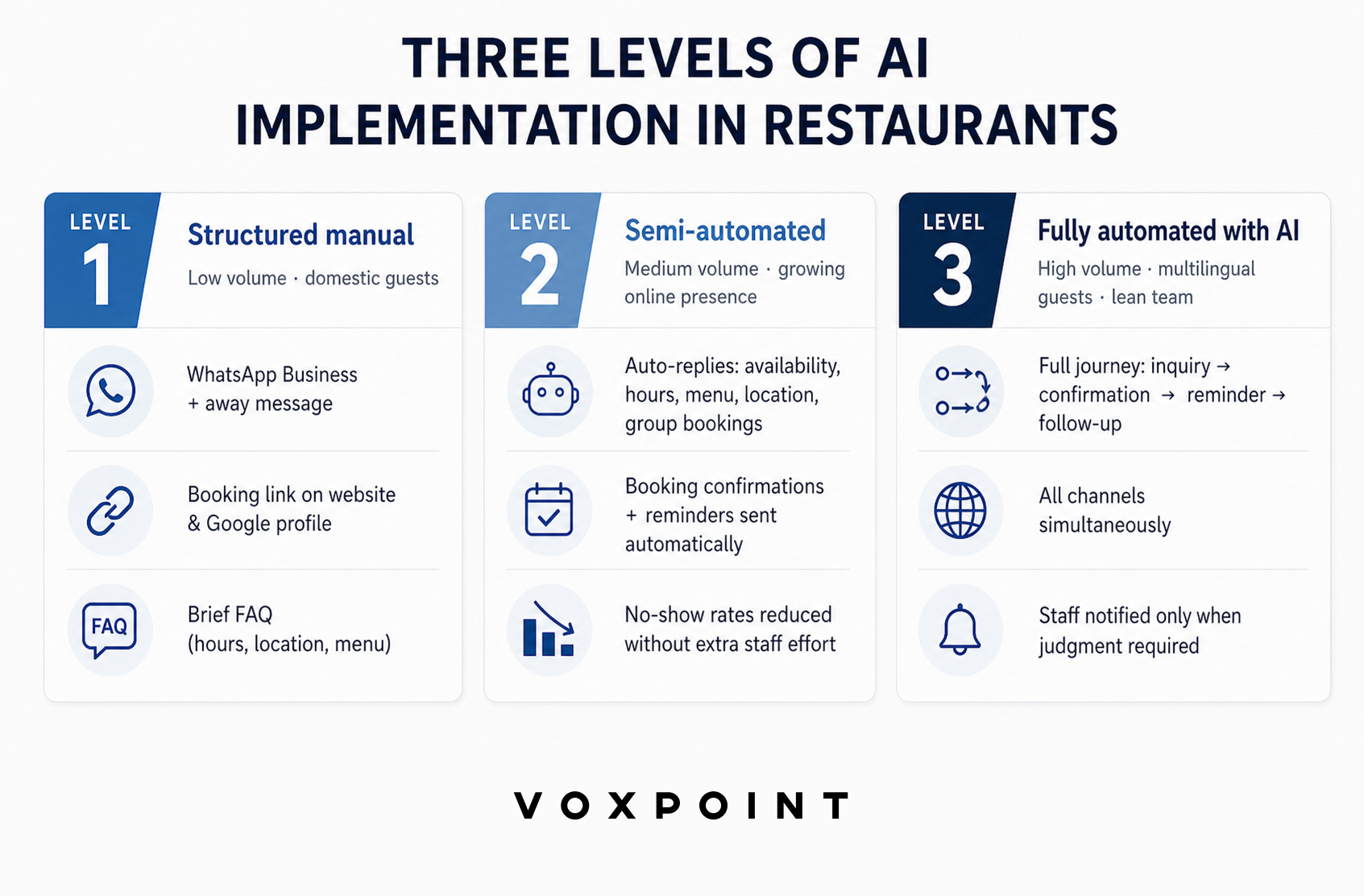
Three levels of implementation
Level 1 — Structured manual (low volume, domestic guests)
Configure WhatsApp Business with an away message, a booking link, and a brief FAQ on your website or Google profile. This reduces friction without significant investment and gives guests an alternative path when no one is available.
Level 2 — Semi-automated (medium volume, or growing online presence)
Automate responses for the most common inquiry types: availability, hours, menu, location, group bookings. Set up automatic booking confirmations and reminders. This handles most routine volume and directly reduces no-show rates without requiring staff attention for every interaction.
Level 3 — Fully automated with AI (high volume, multilingual guests, or small team)
An AI assistant trained on your restaurant handles the full conversation — from first inquiry to post-visit follow-up — across all channels simultaneously. Staff are notified only when something requires their direct involvement. This makes sense for restaurants with high inquiry volume, strong international demand, or a lean team managing multiple responsibilities during service.
Configure WhatsApp Business with an away message, a booking link, and a brief FAQ on your website or Google profile. This reduces friction without significant investment and gives guests an alternative path when no one is available.
Level 2 — Semi-automated (medium volume, or growing online presence)
Automate responses for the most common inquiry types: availability, hours, menu, location, group bookings. Set up automatic booking confirmations and reminders. This handles most routine volume and directly reduces no-show rates without requiring staff attention for every interaction.
Level 3 — Fully automated with AI (high volume, multilingual guests, or small team)
An AI assistant trained on your restaurant handles the full conversation — from first inquiry to post-visit follow-up — across all channels simultaneously. Staff are notified only when something requires their direct involvement. This makes sense for restaurants with high inquiry volume, strong international demand, or a lean team managing multiple responsibilities during service.
What the assistant needs to know
A well-configured assistant for a restaurant needs:
— Real-time availability — connected to your reservation system so it never confirms a table that doesn't exist
— Your full menu — including allergens, dietary options, seasonal changes, and items that vary by day or service
— Your policies — deposit requirements, cancellation terms, group minimums, dress code if applicable
— Your tone — a neighbourhood trattoria, a fine dining restaurant, and a wine bar are three different conversations; the assistant should sound like yours
— An escalation path — when to hand off to a human: complaints, special occasions requiring personalisation, accessibility requests, anything sensitive
— Real-time availability — connected to your reservation system so it never confirms a table that doesn't exist
— Your full menu — including allergens, dietary options, seasonal changes, and items that vary by day or service
— Your policies — deposit requirements, cancellation terms, group minimums, dress code if applicable
— Your tone — a neighbourhood trattoria, a fine dining restaurant, and a wine bar are three different conversations; the assistant should sound like yours
— An escalation path — when to hand off to a human: complaints, special occasions requiring personalisation, accessibility requests, anything sensitive

The bottom line
European restaurant traffic is under pressure from economic uncertainty — but spending per visit is holding or growing. Guests are dining out with more intention, and when they decide to book, they expect a fast, frictionless experience across the channels they already use.
For an independent restaurant with a small team, maintaining that responsiveness manually during service is one of the harder operational challenges to solve. Automation handles the predictable and repetitive so that the team can focus on what happens when the guest walks through the door.
For an independent restaurant with a small team, maintaining that responsiveness manually during service is one of the harder operational challenges to solve. Automation handles the predictable and repetitive so that the team can focus on what happens when the guest walks through the door.
Sources
- IBISWorld — Restaurants & Takeaways in Europe Industry Analysis, 2026
- Circana/Crest — European Restaurant Consumer Panel, Q1 2025 (via WineCouture, May 2025)
- Deloitte — The Future of Restaurants (2023)
- EHL — Serving the Future: The 2025 Global Foodservice Outlook
- Incrementoo — Indagine Prenotazioni Online e No-Show 2025, based on 212,000 reservations across 300 Italian restaurants (Italian Gourmet, September 2025)
- InsideSales.com & Kellogg School of Management — Lead Response Management Study